Ensuring ethical and transparent interactions between pharmaceutical companies, physicians, and patients is critical for both public trust and regulatory compliance. However, detecting irregular behavior within large-scale healthcare data is far from trivial.
At AI-Sunrise, we applied advanced data analytics and statistical inference to uncover anomalous interaction patterns in physician–patient data.
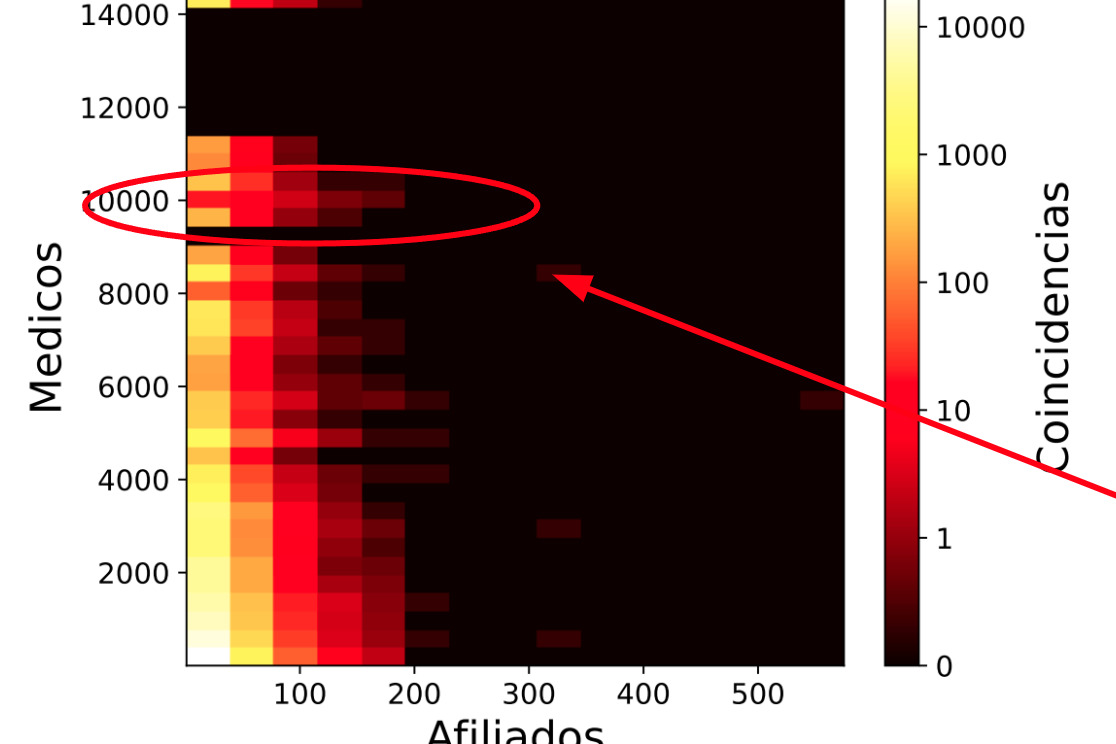
Modeling Patient Distributions
The foundation of our approach was to characterize the probability distributions of patient populations across multiple relevant variables. These variables captured medical, demographic, and behavioral dimensions observed across the dataset.
By modeling what constitutes a statistically “normal” patient distribution, we established a rigorous baseline against which individual physician profiles could be evaluated.
Identifying Statistical Outliers
Using this probabilistic framework, we tested whether the patients associated with each physician were likely to be sampled from the expected distributions.
Physicians whose patient populations showed significant statistical deviations were flagged for deeper analysis. Importantly, this approach avoids arbitrary thresholds and instead relies on formal statistical likelihoods.
An anomaly is not an accusation — it is a signal that deserves careful examination.
From Signals to Insight
The subset of anomalous cases was studied in detail, combining quantitative evidence with contextual analysis. This process revealed several unexpected and informative patterns that would have remained invisible using traditional rule-based methods.
These findings provided the pharmaceutical company with:
- Clear, data-driven indicators of potential irregularities
- Prioritized cases for further investigation
- Greater confidence in compliance monitoring processes
Trust Through Statistical Rigor
This project illustrates how statistical modeling and uncertainty-aware analysis can support sensitive decision-making in regulated environments.
At AI-Sunrise, we believe that robust analytics not only detect risk — they help organizations act responsibly, transparently, and with confidence.