Early detection is critical when managing a pandemic. Traditional surveillance systems often react with delay, relying on confirmed diagnoses that arrive only after contagion has already spread.
At AI-Sunrise, we explored a different signal: emergency phone calls.
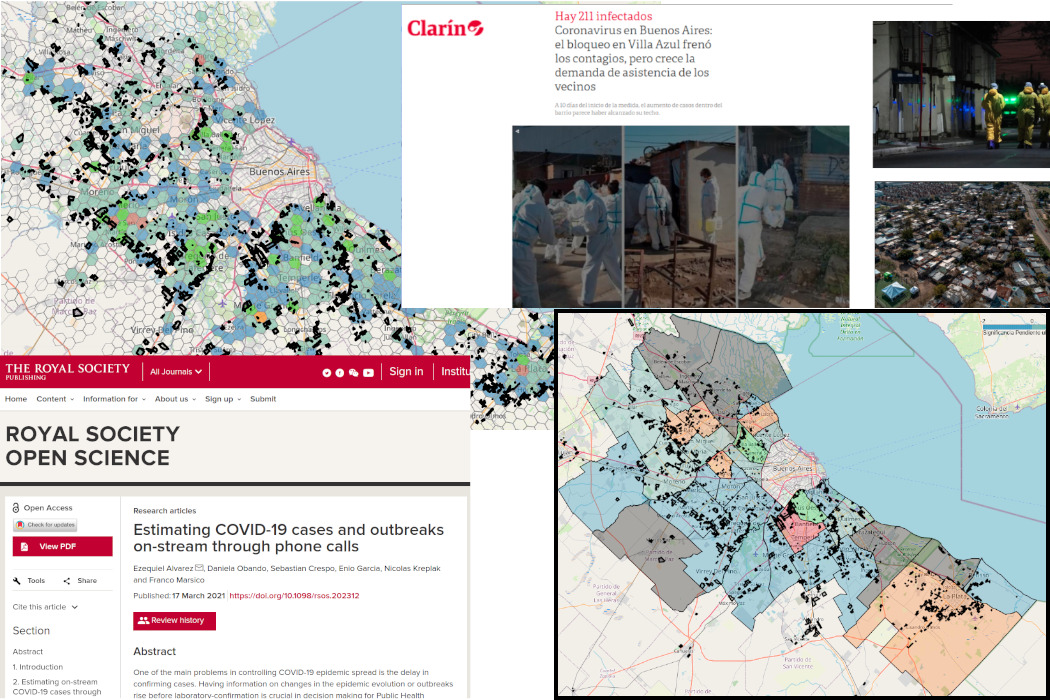
Emergency Calls as an Early Signal
We analyzed large-scale data from 911 phone calls, combined with confirmed COVID-19 case records. The hypothesis was simple but powerful:
Changes in the volume and geographic distribution of emergency calls may precede official case confirmations.
People often seek help when symptoms become worrying — well before testing or formal diagnosis occurs.
Learning the Pattern of an Outbreak
Using statistical learning techniques, we modeled the joint distribution between:
- The number of emergency calls
- Their geographic origin
- The subsequent confirmed COVID-19 cases
From these patterns, we developed a software system capable of estimating the number of COVID cases in near real time, solely from emergency call data.
A Real Early Warning System
The resulting system acts as an early alarm, detecting anomalous increases in calls that are statistically linked to upcoming outbreaks.
This approach enables:
- Faster public health responses
- Early allocation of medical resources
- Proactive containment measures
All before traditional surveillance systems raise an alert.
Scientific Validation
The methodology and results of this project were rigorously validated and published in a peer-reviewed scientific journal:
📄 Early detection of COVID-19 outbreaks using emergency call data
Royal Society Open Science
👉 https://royalsocietypublishing.org/doi/full/10.1098/rsos.202312
This publication confirms both the soundness of the approach and its real-world applicability.
Data Science for Public Health
This project demonstrates how non-traditional data sources, combined with robust statistical modeling, can dramatically improve public health decision-making.
At AI-Sunrise, we believe that when data is listened to carefully, it can warn us — sometimes before we even know we should be worried.